




This week we bring you more stories from the South Wales Argus archive - looking back at 50 and 100 years ago.
Charlie sells last edition

On February 28, 1976, we reported that a lifelong newspaper salesman had delivered his final edition after more than 60 years on the job.
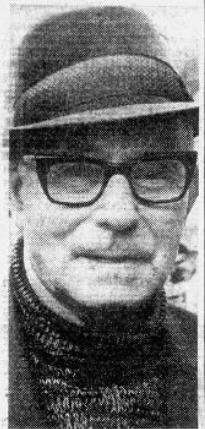
Charlie Powrie, a familiar face in Pill, decided to retire following a minor heart attack, bringing to an end 62 years of delivering the South Wales Argus without a single break.
Speaking from his home on Waterhouse Parade, Mr Powrie reflected on how it all began when he was just 10 years old.
He said: "I saw a boy with some papers, and he told me he had earned fivepence selling them, so I had a go.
"I was 10 years old when I started and, in fact, I was summoned for selling papers too young."
Despite the early brush with the law, he continued with the job for more than six decades.
Mr Powrie said: "I have always enjoyed the job. It has kept me young."
Going hungry for Welsh

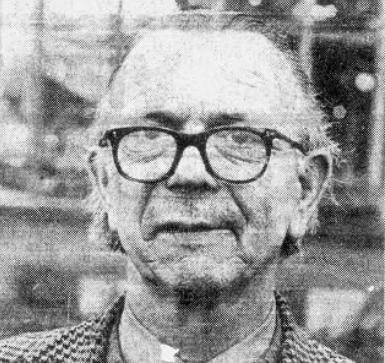
Elsewhere in Newport on February 28, 1976, we reported that a 62-year-old resident, Ard Caerwyn ap Gwett, also known as Bertram Chaplin, is to celebrate St David’s day by going on a week’s hunger strike in protest at the neglect of the Welsh language.
Mr ap Gwett, a weighbridge operator at Llanwern steelworks, plans to sustain himself on tea and strained soup during the week-long protest, living on just liquids, and intends to continue working throughout.
He expected his family and workmates to help him, and said: "I don’t expect to be tempted, but if I was I know they’d be quick to point it out to me.
"I don’t expect it will damage my health."
The hunger strike follows previous fasts, including a 36-hour protest outside Newport’s law courts in 1972.
Pickets will keep vigil
In Ystrad Mynach on February 28, 1976, we reported that picketing continued outside the Nova Knit factory after 83 workers were dismissed. Management claimed it was because they would not adopt new working conditions.
Picketers claimed those occupying the canteen had no access to toilet facilities, though management denied this.
A spokesman for the National Union of Hosiery and Knitwear Workers said that legal advice was being sought regarding the dismissals.
Ex-manager Dave Elliott speaks out - 'I was let down by board'

Meanwhile on February 28, 1976, former Newport County manager Dave Elliott publicly criticised the club’s board after his recent sacking.
Mr Elliott said at his home in Llandevaud: "Things like this happen in football, but I am bitter against the board because of the way in which they sacked me.
"Things have been going on behind my back for some time.
"I felt that the board were waiting for an excuse to get rid of me."
He said he felt unsupported by the board over key decisions, especially regarding player signings during periods of injury.
Mr Elliott said: "I do not regret moving to Newport. I have enjoyed it."
Women terrorised
Further back in time on March 1, 1926, we reported that Newport Police Court heard the case of Arthur E. Tutton, of no fixed abode, who was fined £1 for begging and £1 for assaulting a police officer or one month’s imprisonment in default.
Tutton was charged with begging in Summerhill Avenue and assaulting P.S. Codling.
He had refused bread and cheese when offered and used abusive language before striking the officer as he attempted to arrest him.
A day worker at the house, Mary Hatton, confirmed the defendant had used bad language and turned down the offer of food.
The mayor, Councillor C.T. Clissitt, said the bench took the matter very seriously and was 'determined to put this kind of thing down,' particularly the intimidation of women when alone at home.
Theft of flour
In other cases, we reported on March 2, 1926, that two Llanhilleth youths were found guilty of stealing 12 packets of flour from a Newport lorry and hiding them under stones in a nearby wood.
Both admitted the offence.
One was ordered to pay 8s in costs, and the other, who had a clean record, was ordered to pay 10s.
Bargoed miner's request for a lock of hair
On March 4, 1926, we reported that George Thomas, a miner from Bargoed, was awaiting execution for the murder of his sweetheart in Pontlottyn.
He made a request for a lock of the deceased's hair to be taken to him. He wrote: “The sands are running out, but there is only one way to beat it, and that is to put our faith in the Lord absolutely.
More than 9,000 people signed a petition for his reprieve.


Share