




This week, three planets to look out for across the region and why the evenings are getting darker faster as we move into autumn.
Positioned in the southwest after sunset, Venus will remain with us for much of September.
However, as we move through the month, our companion that has kept us company during the summer evenings will sink lower and lower until we lose sight of it completely before October commences.
In the morning sky, a waning crescent Moon will act as guide to finding both Mars and Jupiter.
Before dawn on Sunday September 6 and Monday September 7, Mars will be positioned close to the Moon, distinguishable as a reddish looking bright star.
On Tuesday September 8 and Wednesday September 9, watch for Jupiter, with the Moon to the west on the first night and to the east on the second night.
Jupiter will appear considerably brighter than Mars.
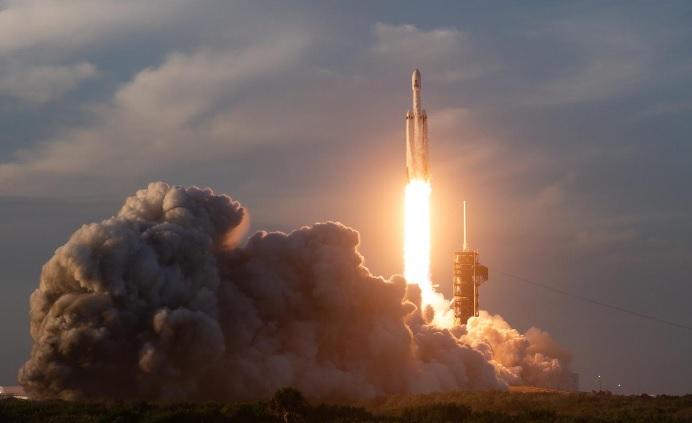
Following in the footsteps of the Hubble Space Telescope and, more recently, the James Webb Space Telescope, NASA has launched the latest scope to scour the skies in the form of the Nancy Grace Roman Space Telescope.
Named after NASA’s first chief of astronomy, the telescope has a five-year mission with one of its objectives to map billions of galaxies.
The telescope is named after Nancy Grace Roman, who died in 2018, an American astronomer considered the Mother of Hubble for her role in the planning of the Hubble Space Telescope.
Positioned some one million miles away from Earth, the new telescope will work alongside both Hubble and James Webb in an attempt to reshape our understanding of the universe.
The new telescope possesses a field of view 100 times greater than that of Hubble.
Most of us have spotted that the evenings appear to be pulling in, as per usual for the time of year, at quite an alarming rate.
Only a month or so ago, it seemed that it was way after 9pm before it started to even look like getting dark.
At the start of September, the Sun was setting at 7.58pm, but by the end of September, it will be setting at 6.52pm.
After the summer solstice the pace at which we lose daylight will hasten as we approach the autumnal equinox later this month, and it’s all due to the tilt of the Earth’s axis.
As we move through September, the Earth’s position creates the fastest change in the Sun’s angle meaning a greater daily difference in the length of daylight.
As a result we perceive September evenings as getting truly darker, quicker, than say in July or August.
International Space Station (ISS): The space station switches to being an evening object rather than an early morning one.
Wednesday September 9: Rises SW – 8.56pm Sets SE – 8.58pm.
Thursday September 10: Rises SW – 9.44pm Sets SW – 9.46pm.
Friday September 11: Rises SW – 8.57pm Sets SE – 9.01pm.
Send your astrophotography pictures to: thenightsky@themoon.co.uk


Share